
 Image 1 of 1
Airway and Breathing Comprehensive Therapy
Individualized, comprehensive therapy for oral and facial dysfunctions that can be contributing to airway and breathing issues.
Airway & Breathing Issues Myofunctional Therapy May Help
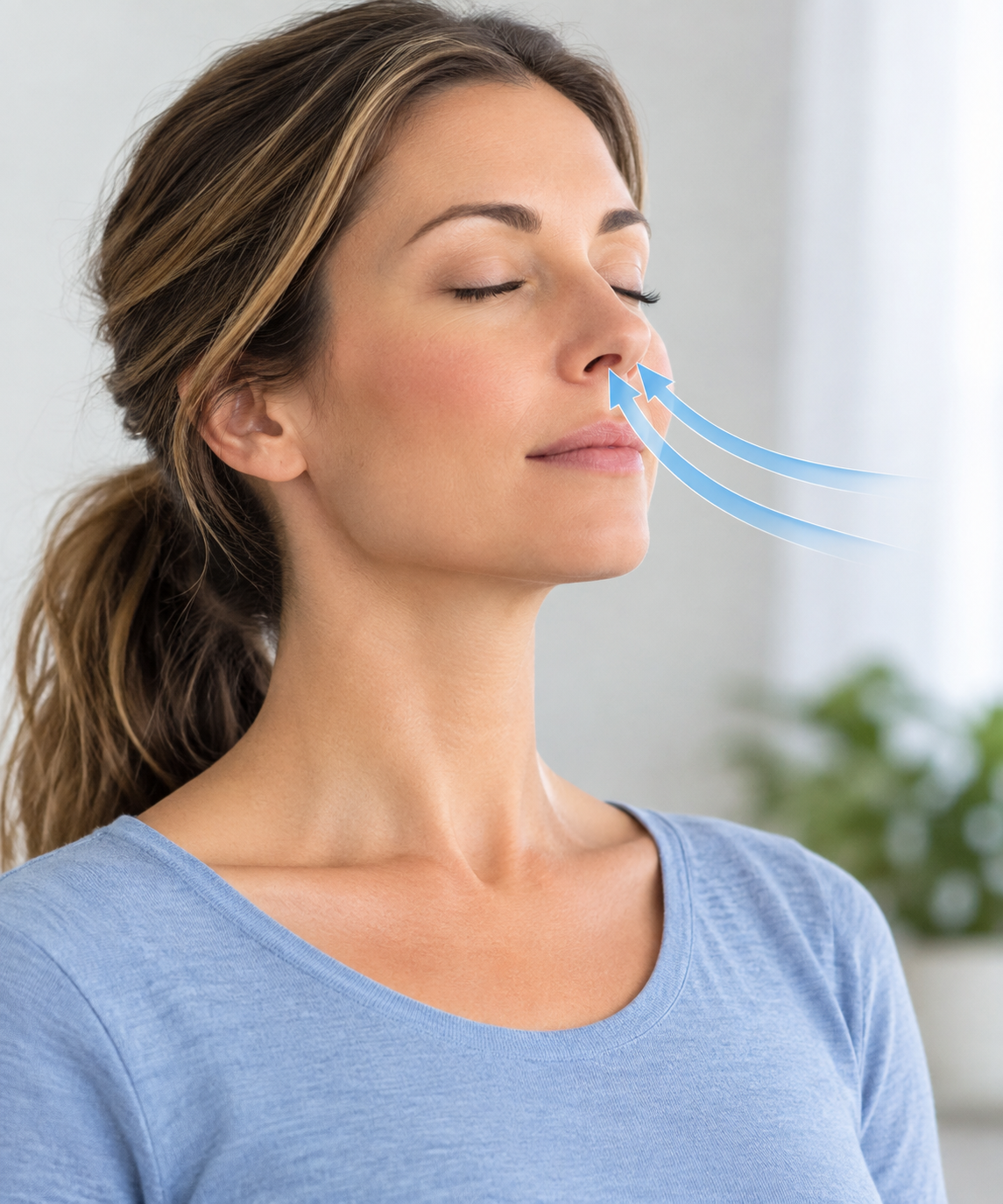
Mouth Breathing — Helps retrain the muscles and breathing pattern to encourage nasal breathing and improve the ability to maintain a comfortable, closed-mouth resting posture.
Chronic Open-Mouth Posture — Strengthens and coordinates the lips, tongue, and facial muscles to support a natural lip seal at rest.
Low Tongue Resting Posture — Teaches proper tongue positioning against the palate rather than allowing the tongue to rest low or forward in the mouth.
Forward or Incorrect Tongue Posture — Helps retrain the tongue to rest and function in a more appropriate position, which can support better oral and airway function.
Tongue Thrust — Addresses an abnormal swallowing pattern in which the tongue pushes forward or against the teeth during swallowing.
Inefficient Swallowing Pattern — Improves coordination and function of the tongue, lips, jaw, and facial muscles during swallowing.
Nasal Breathing Dysfunction — Encourages consistent nasal breathing when adequate nasal airflow is available, while identifying patients who may need evaluation for an underlying nasal obstruction.
Snoring — Can improve muscle tone, coordination, and resting posture of the tongue and oropharyngeal structures that contribute to airway narrowing during sleep.
Sleep-Disordered Breathing — May improve aspects of sleep-related breathing by improving oral and oropharyngeal muscle function and supporting more appropriate airway posture.
Obstructive Sleep Apnea (OSA) — May be used as an adjunctive therapy to improve upper-airway muscle function and certain sleep-breathing outcomes. It should not replace appropriate medical evaluation or prescribed OSA treatment.
Poor Tongue Muscle Tone or Endurance — Exercises can improve the strength, endurance, and coordination of the tongue and surrounding muscles.
Poor Lip Strength or Lip Seal — Helps improve the ability of the lips to remain comfortably closed at rest, which can support nasal breathing.
Abnormal Jaw and Tongue Muscle Coordination — Helps coordinate the muscles involved in breathing, chewing, swallowing, speech, and resting posture.
Airway-Related Oral Habits — Addresses habits such as chronic mouth opening, low tongue posture, and inappropriate oral muscle patterns that can contribute to inefficient breathing.
Post-Treatment Airway and Oral Function — Can help patients maintain improved tongue, lip, and breathing patterns following orthodontic, dental, ENT, or other airway-related treatment.
Important distinction: OMT is generally addressing muscle function, posture, coordination, and breathing patterns rather than physically removing an obstruction. Patients with enlarged tonsils/adenoids, significant nasal obstruction, a deviated septum, allergies, craniofacial abnormalities, or suspected sleep apnea may need evaluation by an appropriate medical or dental specialist in addition to OMT